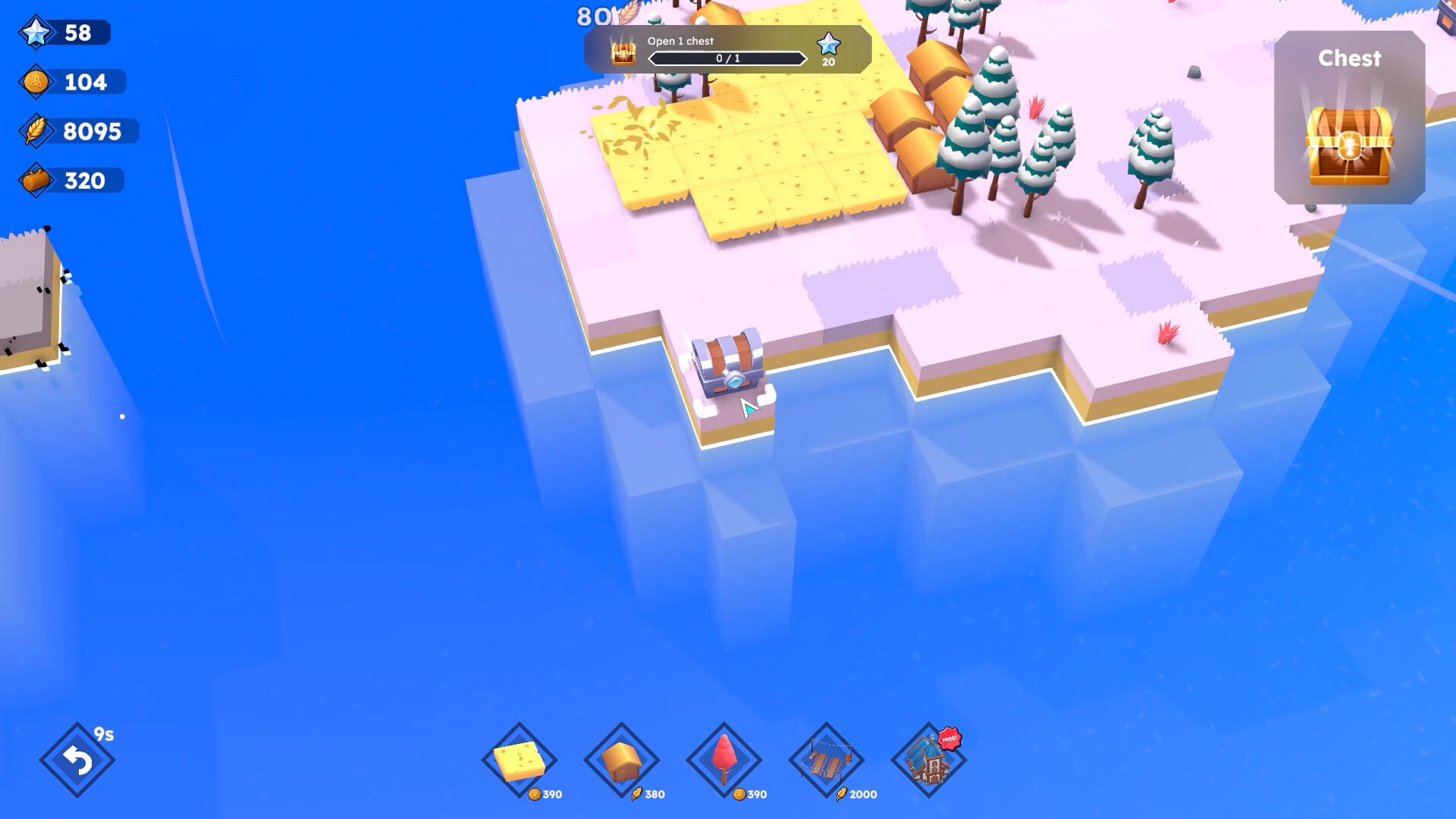
Farewells Clicker Review
A launch-week read after the 17 August 2026 release.
Farewells Clicker launched on Steam on 17 August 2026. Team Square priced it as a small paid incremental (about $6.90 before the introductory discount that runs through 31 August 2026). This review is for people who played the demo, watched a Next Fest stream, or are deciding on launch week. It is not a Metacritic substitute. At launch the store page had only a handful of user reviews, which is too small a sample for a score.
If you want mechanics instead of a verdict, start with How to Play and the Buildings Hub. This page exists to answer “is it for me?”
What kind of game it is
It is a single-player casual strategy toy: claim land, place buildings that buff each other, click to accelerate, and spend stars on a skill tree. It is not a combat game. It is not a Roblox experience. It is not a live-service with weekly codes. Steam lists Casual, Indie, Simulation, and Strategy, plus achievements, Steam Cloud, and family sharing.
The fantasy is a bright little realm that gets larger until you farewell it. If you like watching a coastline fill with mills and manors, the loop lands. If you need PvP, narrative, or a deep combat build, this is the wrong store page.
Demo versus 1.0
The demo (Steam app 4437930) existed from 19 February 2026 and returned for Next Fest in June. Patch 0.6.0 used that festival to add Guild Hall, Cottage, Watch tower, chest events, Chest Discovery, Detailed mode, and proper display settings. Patch 0.6.2 cleaned Storm bugs and more ultrawide UI issues.
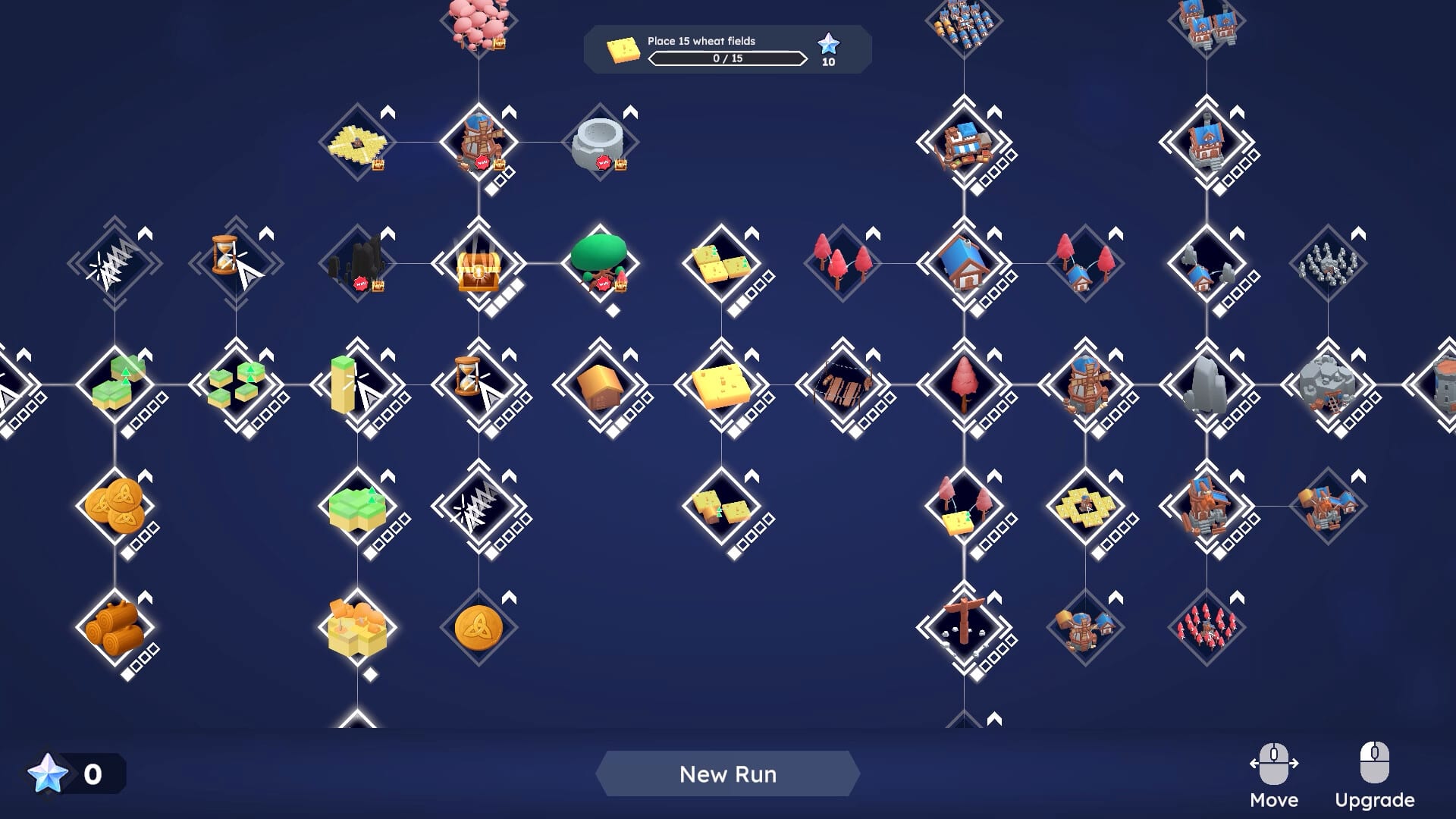
1.0 is the late-game and quality-of-life pass. New or newly unlocked buildings include Rock, Obsidian, Quarry, Tower, Lumbermill, Manor, Castle, and Portal. New nodes include Multi Claim, Chest Discovery (if you missed it in the demo), Jungle, and Windmill range. Creative Mode lets you place, claim, and remove freely. Achievements were added. Camera invert and a light/dark view transition landed. The developers said early-game balance was already in a place they liked and that 1.0 attention went to the late game, plus performance on large islands.
If you bounced off the demo because the ending felt missing, 1.0 is the version to retry. If you bounced off because you dislike clicking and city-builder adjacency puzzles, 1.0 will not convert you. Auto-click is better than it was, but the soul of the game is still “put the right building next to the right field.”
What it does well
Neighbor rules are readable once Detailed mode is on. A quarry that wants rocks and a lumbermill that wants trees is the kind of synergy you can teach in one sentence. Watch tower as a pure land-grab building is a clean design joke. Chest events give the island a personality beyond number-go-up: moles, clones, or a storm that pays you to rebuild.
The settings story from demo to launch is also good. Players asked for resolution, language, ultrawide UI, and better tooltips. Those shipped. That is a studio listening, not a marketing bullet.
What may frustrate you
Exact formulas are still in the client, not in a public design doc. This wiki will not invent them. If you want a spreadsheet idle with every coefficient on a wiki table, you will be hovering tooltips for a while.
Quest tracking was messy in the demo (towers and the second quarry). Retroactive quest validation and “placing a building counts” were patched, but launch week is when leftover edge cases appear. Volume-slider complaints from the demo may or may not be gone; Steam now advertises custom volume controls.
Tempest can feel like grief if you did not read the chest. That is a design choice, not a bug. Read chest events before you play greedy.
Who should buy it on launch week
Buy it if you enjoyed the demo’s first hour and wanted a late game, a Portal to chase, and a Creative Mode sketchbook. Buy it if you like incremental games that are also placement puzzles. Wait or skip if you need multiplayer — there is none. Wait if you only want a clicker with no adjacency rules. Wait if you are allergic to prestige resets; farewell is in the title and in the achievement list.
The introductory discount ending 31 August 2026 is the practical “if you were going to try it anyway” window. After that, the full price is still in indie-clicker territory.
How this wiki fits the purchase
Use Building Synergies and the Synergy Planner to see whether you like the adjacency puzzle before you optimize. Use Early Skill Nodes to avoid wasting stars. Use How to Farewell so the first reset is a decision. Use Patch 1.0 as the canonical list of what shipped. Use the Links Hub for Steam, the demo, and support.
Verdict
Farewells Clicker 1.0 is a small, complete-feeling island incremental from a studio that already patched its demo in public. It rewards reading neighbor rules and punishes opening Tempest on a pretty town. It is single-player, short to understand, and long if you chase large islands and the Portal. That is enough for a recommend — with the caveat that launch-week review volume is still tiny, so your own two-hour Steam refund window matters more than anyone’s score.
If you want the mechanical deep dives after this verdict, return to the Guides Hub and pick the how-to that matches the wall you just hit.
Frequently Asked Questions
Quick answers to the most common Farewells Clicker questions.
Is Farewells Clicker worth buying if I played the demo?
Yes if you wanted a late game, Creative Mode, and the 1.0 buildings. No if the adjacency-and-click loop already bored you.
Does it have multiplayer or codes?
No. It is single-player on Steam and has no official promo-code channel.
How long is the introductory discount?
The Steam launch offer is listed as ending 31 August 2026. Confirm the live price on the store page.
Is this review official?
No. This is an unofficial fan wiki. Always check Team Square’s Steam news for the current patch.
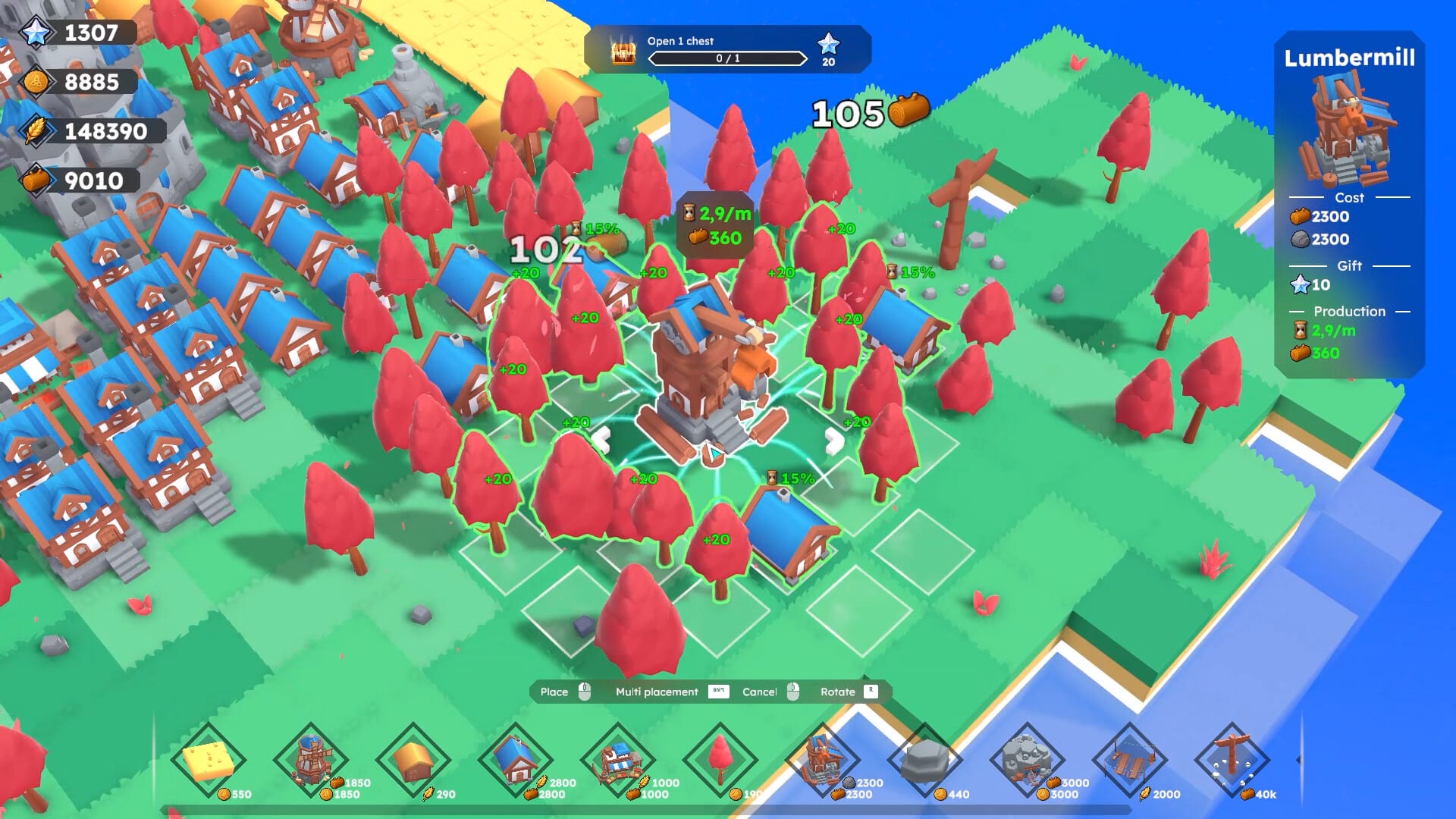
Guides Overview
Farewells Clicker guides for how to play, expand land, farewell, chest events, controls, and a launch-week review.
How to Play
Learn Farewells Clicker from the first click: claim tiles, place producers, use auto-click, and finish the opening quests.
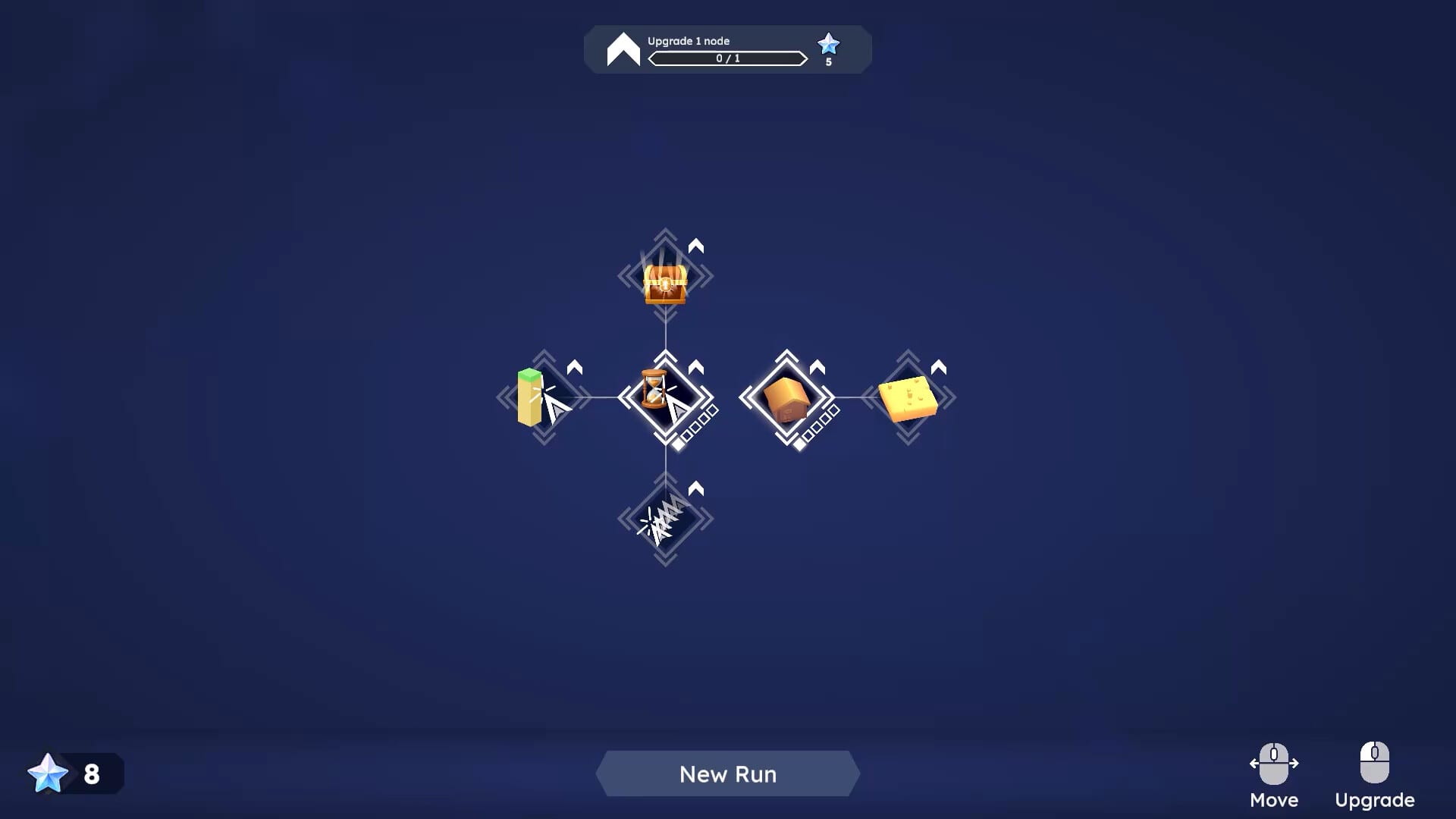
Expand Island
Expand a Farewells Clicker island with Watch towers, Multi Claim, and smarter borders instead of empty claimed grass.
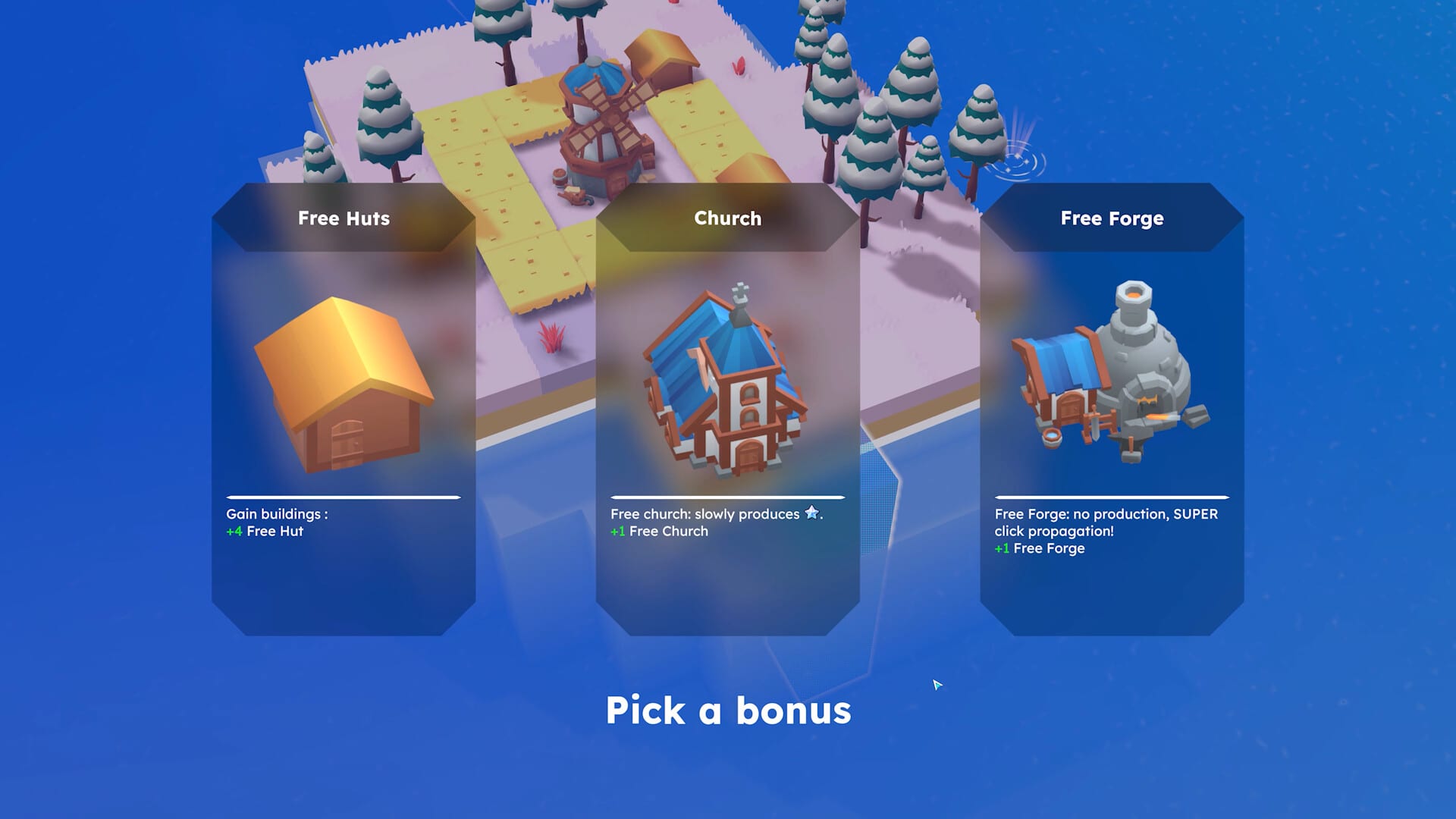
How to Farewell
Learn when a Farewells Clicker farewell reset is worth it, what the recap shows, and when Creative Mode is safer.
Chest Events
Chest events in Farewells Clicker: Whack-A-Mole, Tempest, and Cloning, plus when Chest Discovery is safe to unlock.
Controls
Farewells Clicker controls: Detailed mode, resolution, language, inverted camera, and ultrawide fixes from the 0.6 patches.